

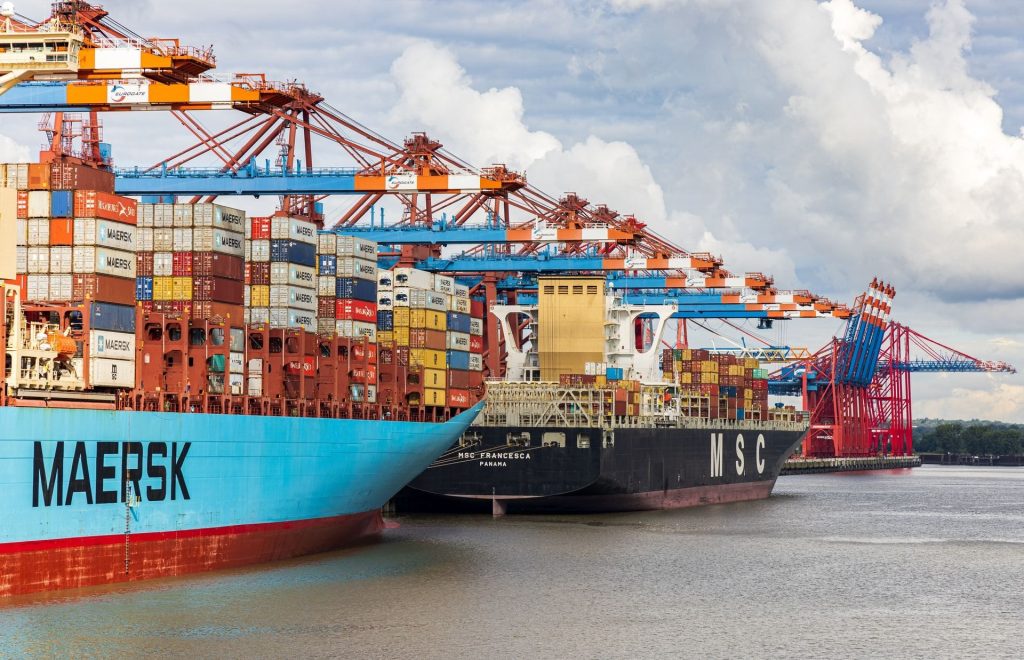
In global trade, time is measured not in hours or days, but in direct financial losses deducted from company accounts in real time. Imagine a typical crisis scenario that regularly unfolds in international shipping: a large cargo vessel carrying sixty thousand tons of grain gets stuck on approach to its destination port. The cause might be a sudden seasonal storm, congestion at the grain terminal, or a sharp dispute between the captain and port authorities over whether the cargo holds are dry and clean enough to begin unloading. While independent inspectors draw up survey reports and lawyers exchange angry letters regarding readiness to receive the goods, the downtime meter ticks relentlessly, with each day of delay costing the customer between twenty-five and forty-five thousand dollars.
From there, the conflict escalates in an avalanche-like scenario where every move only deepens the paralysis. The vessel owner demands immediate payment for excess downtime and threatens to withhold delivery of the goods at the port, citing a contractual right to retain the cargo until full settlement. The shipping customer, in turn, refuses to pay for the vessel’s lease, claiming the delay stemmed from malfunctioning cargo cranes or crew negligence while preparing for the voyage. Insurance companies enter the fray, freezing all payouts until the causes of the incident are officially established, while the trading company—obligated to deliver the grain to the end buyer on a strict schedule—faces cascading penalties and risks forfeiting bank payment under a documentary letter of credit due to delayed shipping documents. The situation is compounded by nature itself: while the parties argue, damp grain inside closed holds under a tropical sun begins to spoil, turning a dispute over a few days of delay into a multi-million-dollar claim for total cargo loss.
The defining feature of transport and logistics disputes lies in their hyper-globalized nature and multi-layered contractual architecture. A single shipment simultaneously intertwines the interests of a vessel owner from Greece or Cyprus, a transport operator from Denmark, a commodity trader from Switzerland or Dubai, a guarantor bank in London, an insurer in Norway, and a port terminal in Southeast Asia. All of them are bound by an intricate chain of agreements differing in legal nature—vessel lease contracts, carriage contracts, shipping documents, freight forwarding agreements, and insurance policies. Yet the primary physical asset—the transport and the cargo—sits in a single geographic spot on the planet, and any procrastination destroys the economic viability of the entire commercial venture. Recent global logistics crises—from the blockage of the Suez Canal by a giant container ship to the forced rerouting around the Red Sea, where hundreds of vessels were trapped in uncertainty and the allocation of cargo salvage costs threatened to paralyze trade for years—illustrate this vividly. That is precisely why the shipping and global logistics industry was the first to realize that waiting for a traditional court verdict mid-transit is tantamount to financial suicide, prompting it to build its own rapid mediation mechanisms.
The Anatomy of a Logistics Conflict: Why Courts and Classic Arbitration Lose to Speed
To understand why traditional justice proves powerless in transport matters, one need only examine the technical specifics of the disputes themselves. Most frequently, conflicts erupt over penalties for delaying transport at a port beyond the allotted unloading window or for the late return of empty containers. Another massive share of disputes involves damage, water ingress, or cargo shortages during a storm, where the carrier defends itself by citing force majeure weather conditions while the cargo owner argues the transport was technically unfit even before departure. A distinct, exceptionally complex category involves technical disputes over the supply of substandard marine fuel capable of disabling engines mid-ocean within hours, necessitating costly towing and triggering disputes over the supplier’s liability. Added to this are breakdowns in combined supply chains, where cargo moves sequentially by sea, rail, and road, making it exceedingly difficult to pinpoint at which exact handover point a loss or delay occurred.
The sharpest and most painful instrument of pressure in such conflicts is the arrest of a vessel. International conventions and the laws of leading port nations—such as the Netherlands, Singapore, the United Kingdom, or South Africa—allow a creditor to apply to a local court at the port of arrival and, literally within hours, physically block the vessel from departing as security for a monetary claim. Such an arrest instantly paralyzes the carrier’s operations, disrupts subsequent contracts, and forces the owner to keep paying port dues and maintaining a crew with zero revenue. To release the transport from arrest, the owner must urgently post a multi-million-dollar bank guarantee or a letter of undertaking from its insurer. Yet even once the vessel returns to service, millions of dollars remain frozen as security, removed from the company’s working capital for years while the dispute is litigated on the merits.
State courts of general jurisdiction are poorly suited to resolving such conflicts and sometimes become a source of additional chaos. Judges in ordinary commercial courts objectively lack deep engineering, meteorological, and logistical expertise. They do not know how allotted unloading time is properly calculated accounting for weather conditions, whether rain interrupts the clock during grain loading, how ice clauses are interpreted, or how international carriage conventions interact with Incoterms trade rules. Moreover, state courts are rigidly bound by national procedural codes, demand the legalization and official translation of thousands of pages of technical logs, and cannot swiftly encompass a cross-border deal structure spanning parties across three continents.
Even specialized international arbitration, whose undisputed global hub has historically been London, often proves too slow and financially burdensome. A full-scale arbitration proceeding in London entails multiple rounds of exchanging lengthy written submissions, disclosing internal company email correspondence, retaining independent experts in shipbuilding, navigation, and fuel chemistry, and holding multi-day oral hearings with witness and engineer cross-examinations. Such a process takes an average of one and a half to two years. Furthermore, in logistics practice, the lion’s share of daily operational conflicts involves sums between one hundred and three hundred thousand dollars. In such cases, the fees of British lawyers, advocates, technical experts, and arbitrators frequently exceed the value of the claim itself, turning a formal legal victory into a net economic loss for both sides.
London, Singapore, and BIMCO: How Institutions Built Mediation into International Transport
Recognizing this economic and procedural dead end, leading global transport associations and arbitration institutions did not wait for angry carriers and traders to initiate negotiations on their own. They systematically embedded mediation directly into standard contracts and arbitration rules, transforming it into a natural, protected, and financially advantageous stage of dispute resolution.
A telling example is the London Maritime Arbitrators Association, known worldwide as the LMAA, which handles the vast majority of global shipping disputes. The Association developed its own mediation rules, whose primary strength lies in the unique caliber of its neutrals. Mediators in London are former captains, mechanical engineers, cargo surveyors, and seasoned transport lawyers who have spent decades dealing with complex shipments. Parties do not need to waste precious hours explaining to the neutral the nuances of different vessel lease types, safety rules for transporting petroleum products, or the causes of engine failures. Such a mediator speaks the technical language of the industry instinctively. During private meetings with the parties, the mediator can assess the technical soundness of both sides’ arguments within hours and soberly, without illusions, point out to company executives the real risks and prospects of their case in full-scale arbitration.
The Baltic and International Maritime Council (BIMCO)—the world’s largest association of carriers, whose standard contracts underpin most global shipments of liquid, bulk, and general cargo—went even further in institutionalizing negotiations. The association integrated combined dispute resolution clauses directly into its baseline contracts, pairing arbitration and mediation under a distinct procedural logic. Under these rules, either party may formally initiate mediation at any stage after arbitration has commenced, without automatically halting the arbitration timeline or allowing an unscrupulous debtor to use the procedure as a stalling tactic. The most compelling and effective element of this mechanism is a strict financial sanction for refusing dialogue: if one party rejects an offer to mediate without valid reason or sabotages the process, the arbitral tribunal holds the explicit authority to order that party to bear a substantial share of the arbitration costs, even if it ultimately wins the case on the merits. This rule reshaped the behavioral economics of logistics disputes, turning mediation from a declarative wish into a rational standard of commercial conduct.
Singapore, which over recent decades has evolved into Asia’s premier transport and logistics hub, introduced its own remarkably effective and technologically sophisticated model. The Singapore Chamber of Maritime Arbitration, together with the Singapore International Mediation Centre, pioneered a hybrid “Arbitration — Mediation — Arbitration” protocol. Under this procedure, parties first file a claim in arbitration—securing their procedural rights and stopping limitation periods—after which the proceedings are immediately stayed, and the disputants sit down at the negotiating table with a specialized mediator for one or two intensive days. Once the parties reach a compromise, they return to the arbitral tribunal, which records their settlement as an arbitral award on agreed terms. This legal maneuver brilliantly solves global logistics’ biggest headache: cross-border enforcement. Whereas a standard private settlement agreement breached in another country must be enforced through fresh, protracted litigation, a consent arbitral award is subject to immediate compulsory enforcement in over one hundred and seventy countries under the 1958 New York Convention, enabling the instant release of arrested vessels and frozen bank guarantees at any port worldwide. The continental European center UNUM in Rotterdam followed a similar path, uniting maritime, transport, and logistics expertise to prove that in the fast-paced world of modern trade, the negotiating table works far more effectively than the courtroom.
Comparative Analysis: International Arbitration vs. Transport and Logistics Mediation
Placing classic international arbitration in London or Singapore on one side of the scale and specialized transport and logistics mediation on the other makes it clear that these tools serve fundamentally different managerial objectives. Arbitration remains indispensable when parties require a legal precedent, the interpretation of a complex statutory norm, or compulsory recovery from a blatantly bad-faith counterparty simply hiding from payment. Yet in the vast majority of genuine commercial conflicts—where two businesses disagree over risk assessment, transit delays, or unforeseen voyage circumstances—arbitration loses to mediation across several critical dimensions.
The first and most tangible difference lies in cost proportionality and decision-making speed. Full-scale arbitral adjudication of even a relatively straightforward dispute over port delays or cargo damage requires retaining a team of legal counsel, translating reams of technical documentation, preparing engineering expert reports, and waiting in line for hearings. Ultimately, the business faces frozen capital for a year and a half to two years and legal bills easily climbing into the tens or hundreds of thousands of dollars. By contrast, transport mediation under the rules of leading global centers typically fits into one or two intensive working sessions lasting eight to ten hours. Preparation takes a matter of days, and the budget is fixed, predictable, and a fraction of the cost of arbitration.
The second dimension—often overlooked by lawyers, yet keenly understood by business owners—concerns preserving business reputation and commercial relationships. Global shipping, port logistics, and international commodity trading form a remarkably tight-knit, closed professional ecosystem. The circle of major transport owners, logistics operators, insurers, and traders is finite, and the very companies arguing today over a port delay will inevitably need to sign a new contract next month to move grain or steel. A public arbitral showdown filled with mutual accusations of incompetence or bad faith burns bridges and quickly spreads across the market via industry bulletins. A confidential mediation session, unlike an adversarial trial, allows parties to defuse emotional tension behind closed doors, save face before partners, and walk away from the table with a new contract rather than a black mark in the industry.
Finally, the third fundamental advantage of mediation lies in the flexibility of commercial solutions physically unavailable to any arbitrator. An arbitral tribunal operates within the rigid confines of the pleaded claims and can only render a linear verdict: ordering one party to pay the other a specific sum of money or dismissing the claim. A mediator, however, helps parties engineer multi-step business compromises that turn operational losses into fresh opportunities. Instead of paying scarce cash for transport downtime, a carrier can grant the customer a discount on the next three shipments. If cargo was partially spoiled or wetted in transit, the parties—alongside an independent cargo surveyor and an insurance representative—can agree right at the negotiating table on a joint, rapid resale on the local market at a discounted price and a proportional split of the difference, immediately lifting the arrest on the vessel and unlocking bank guarantees.
What This Means for Ukraine: The Black Sea Corridor, the Danube, and Western Borders
For Ukraine, global experience in transport and logistics mediation has taken on not merely theoretical, but outright existential relevance. Full-scale war has fundamentally redrawn the nation’s logistics map, forcing Ukrainian exports and imports to operate amidst unprecedented security, infrastructure, and regulatory challenges. The operation of the Ukrainian maritime corridor in the Black Sea, the explosive growth in cargo turnover across the Danube port cluster in Izmail and Reni, the rollout of complex war-risk insurance mechanisms, and chronic bottlenecks at western land crossings with European Union countries have created an entirely new reality where logistics conflicts erupt daily.
In this new reality, Ukrainian grain traders, metallurgists, port operators, freight forwarders, and carriers find themselves under dual pressure. On one hand, air raid alerts, strikes on port infrastructure, delays during security inspections of vessels, and sudden shifts in border-crossing rules regularly disrupt delivery schedules. This triggers an avalanche of disputes over downtime penalties, defaults on port-delivery contracts, and the validity of force majeure claims. On the other hand, the lion’s share of Ukrainian businesses’ foreign trade agreements and carriage contracts are governed by English law and stipulate dispute resolution in specialized London arbitrations. For many domestic companies exhausted by war, full-scale arbitration proceedings in the United Kingdom are financially prohibitive, often forcing them to accept unfavorable concessions or abandon the defense of their rights altogether.
The way out of this predicament lies in a systemic shift in contractual and negotiating culture across the Ukrainian transport market. Domestic exporters, shipping customers, and logistics operators must stop treating arbitration clauses as immutable boilerplate and begin purposefully inserting combined mediation-arbitration clauses modeled on international standards into transport lease, freight forwarding, and supply contracts. Including such a clause guarantees that if cargo is delayed or a dispute arises over war-risk insurance costs, the parties will first sit down at the negotiating table with a professional neutral rather than draining their last working capital on foreign litigators.
Alongside evolving contractual practices, Ukraine needs to build its own national pool of specialized transport mediators. General negotiation training is insufficient here: the market needs specialists who combine certified mediation skills with a deep command of transport law, customs procedures, rail and road carriage regulations, and the specifics of port transshipment. These are the experts who will ensure rapid resolution of local conflicts between cargo owners, forwarders, terminals, and carriers both in Danube and Black Sea ports and along cross-border overland routes.
The history of mediation in global shipping teaches a simple, pragmatic truth: in logistics, victory belongs not to those with the fiercest courtroom lawyers, but to those whose ships, railcars, and trucks keep moving without interruption. Integrating mediation tools into the daily practice of Ukraine’s transport sector will enable businesses to preserve precious liquidity, safeguard their reputation as reliable suppliers on world markets, and ensure the uninterrupted flow of the country’s export arteries even in the most challenging times.